Abdikarim Gamadid Iman & Yahye Abdirashid Hassan
Abstract
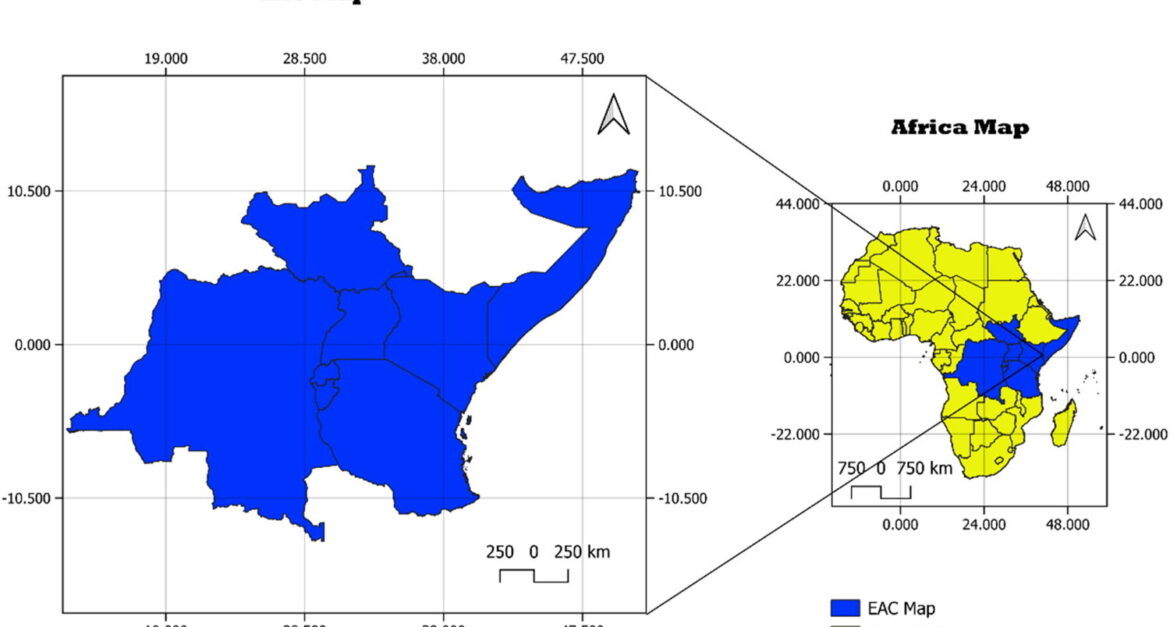
Cereal production remains central to food security in the East African Community (EAC). Yet, most studies emphasize climate but neglect institutional and economic factors. This study examines how political stability, economic integration and agricultural inputs jointly influence cereal yields in eight EAC states (2010–2023). Using World Bank panel data, we apply static models and a dynamic System Generalized Method of Moments (GMM) approach to address endogeneity, heterogeneity and yield persistence. Results show strong persistence in yields: past productivity shapes current outcomes. Political stability has a positive but modest effect under dynamic adjustments, suggesting stable governance enables agricultural performance. Although bivariate relationships suggest a negative association between trade openness and cereal yields, dynamic System GMM results show that trade openness and foreign direct investment significantly enhance cereal yields once endogeneity, persistence and unobserved heterogeneity are controlled for. Among inputs, arable land is the most influential determinant of productivity, while fertilizer use contributes positively but modestly. Diagnostic tests confirm instrument validity and model robustness. Overall, cereal yields in the EAC are shaped by agricultural foundations, institutional stability and economic integration. The study underscores the need for integrated policies promoting governance, regional trade, productive investment and sustainable land management to enhance food security in the EAC.