
Abdullahi Mohamud Adam,
Ikenna D. Uwanuakwa,
Ahmed Abdi Hassan,
Abdinasir Mohamed Yusuf &
Omar Aweis Ali
Abstract
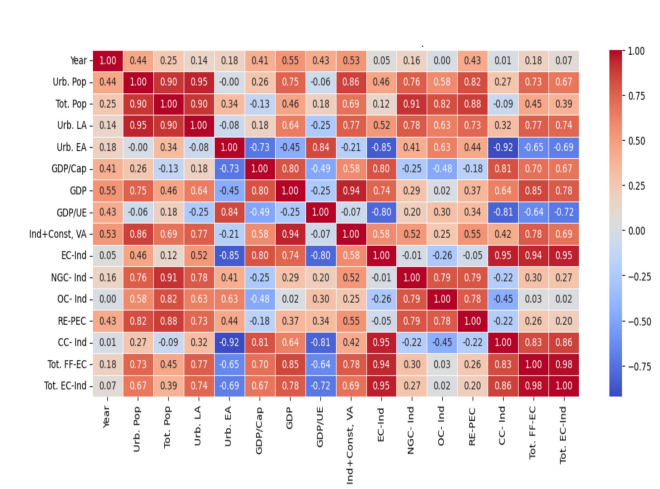
The industrial sector is the cornerstone of the global economy and remains the largest consumer of energy, accounting for 30.4% of global energy use in 2022. As nations pursue energy efficiency and sustainability goals, data-driven modeling approaches are increasingly essential to support strategic planning. This study aims to predict total final energy consumption in the industrial sectors of South Africa, Egypt, and Morocco by developing a hybrid machine learning framework based on data from 2000 to 2022, sourced from the International Energy Agency, the World Bank, and Our World in Data. The proposed framework integrates Bayesian ridge regression, multi-layer perceptron, and CatBoost to harness their complementary strengths, incorporating a comprehensive set of energy, demographic, and economic indicators. Performance evaluation using R2, MAPE, rRMSE, and MAE with fivefold cross-validation confirms the model’s high predictive accuracy. The hybrid model achieved an R2 of 0.992, with comparatively low error margins. To enhance interpretability, eXplainable Artificial Intelligence (XAI) techniques were applied. SHAP results reveal that fuel consumption is the most significant driver of industrial energy demand. Diverse counterfactual explanations (DICE) show that changes in renewable energy consumption and GDP cause the largest shifts in predicted demand. These insights guide smarter energy efficiency strategies.